
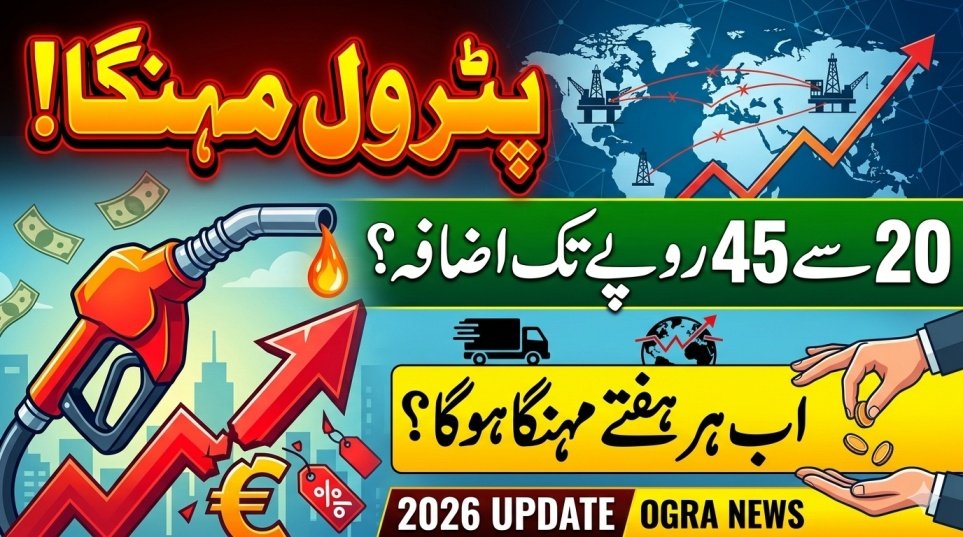
Pakistan may soon face another fuel price shock as the government considers a major change in the petroleum pricing system. Instead of revising petrol and diesel prices every 15 days, authorities are discussing a new weekly pricing mechanism. This change is being considered because global oil markets are unstable and international prices are rising quickly.
If the proposal is approved, petrol prices could increase by around Rs 20 to Rs 25 per litre, while high-speed diesel may rise by Rs 45 to Rs 50 per litre. These changes could affect transport costs, food prices, and the overall household budget across the country.
| Key Information | Details |
|---|---|
| Current Price Revision System | Every 15 Days |
| Proposed New System | Weekly Price Review |
| Expected Petrol Increase | Rs 20 – Rs 25 Per Litre |
| Expected Diesel Increase | Rs 45 – Rs 50 Per Litre |
| Main Reason | Rising Global Oil Prices |
| Decision Authority | Federal Government |

Why Pakistan May Introduce Weekly Petroleum Prices
The government believes that changing petroleum prices every week could help manage economic pressure more effectively. Global oil prices sometimes change rapidly, and the current 15-day system does not always reflect those changes quickly.
Several factors are pushing the government toward the weekly pricing system:
- International oil prices are increasing because of global political tensions.
- Pakistan imports most of its petroleum, so global price changes affect local markets.
- Weekly price adjustments can prevent large financial losses for oil companies.
- It can reduce the chances of petrol pump owners storing fuel before a price hike.
- Faster price updates can help the government manage the national fuel supply more efficiently.
Officials say this system could improve transparency and keep local fuel prices closer to international market rates.

Expected Petrol and Diesel Price Increase
Reports suggest that petroleum products may become significantly more expensive in the coming days. Rising global crude oil prices and increasing shipping costs are the main reasons behind the expected price increase.
Possible price changes include:
- Petrol may increase by Rs 20 to Rs 25 per litre.
- High-speed diesel could increase by Rs 45 to Rs 50 per litre.
- Transport costs for buses, trucks, and delivery vehicles will likely rise.
- Higher transport costs may increase the prices of vegetables and food items.
- Public transport fares may also increase in many cities.
These increases could create additional financial pressure on households already struggling with inflation.
Global Oil Tensions and Their Impact on Pakistan
Pakistan heavily depends on imported petroleum products. When global oil markets become unstable, the country must pay more to buy and transport fuel.
Current global issues affecting petroleum prices include:
- Political tensions in the Middle East affecting oil supply routes.
- Rising crude oil prices in international markets.
- Higher shipping and marine insurance costs.
- Increased demand for fuel in major global economies.
- Currency exchange fluctuations that increase import costs.
Because Pakistan pays for oil in US dollars, any increase in global prices or shipping costs directly affects local fuel prices.

Government Plans to Reduce Fuel Consumption
Along with possible price increases, the government is also exploring ways to reduce fuel consumption in the country. Lower fuel usage can reduce the national import bill and ease pressure on the economy.
Possible fuel-saving measures include:
- Encouraging work-from-home policies for office employees.
- Temporarily shifting some educational institutions to online classes.
- Launching public awareness campaigns about fuel conservation.
- Promoting carpooling and public transport usage.
- Monitoring petrol pump supply to prevent hoarding.
Officials say these steps are similar to the energy-saving measures used during the COVID-19 period.
| Fuel Saving Strategy | Expected Impact |
|---|---|
| Work From Home Policy | Reduce daily fuel consumption |
| Online Classes | Lower school transport traffic |
| Public Awareness Campaigns | Encourage responsible fuel use |
| Monitoring Petrol Pumps | Prevent fuel hoarding |
| Promote Public Transport | Reduce private vehicle use |
| Maintain Fuel Supply | Avoid panic buying |
How Citizens Can Manage Rising Fuel Prices
When petrol and diesel prices increase, families must adjust their spending habits to manage their monthly budgets more effectively.
Some practical steps include:
- Use public transport instead of private cars whenever possible.
- Share rides with friends or colleagues to reduce fuel expenses.
- Keep vehicles properly maintained for better fuel efficiency.
- Combine multiple tasks into one trip to reduce travel frequency.
- Plan monthly expenses carefully and avoid unnecessary spending.
Small changes in daily habits can help reduce the financial burden caused by rising fuel costs.
Conclusion
Pakistan may soon introduce a weekly petroleum pricing system to respond quickly to changes in global oil markets. While this approach could help the government manage fuel imports more efficiently, it may also lead to a significant increase in petrol and diesel prices. Reports suggest that petrol could rise by Rs 20 to Rs 25 per litre and diesel by Rs 45 to Rs 50 per litre. These increases will affect transportation, food prices, and household budgets. Citizens should stay informed through official announcements and adjust their fuel usage and expenses to handle the economic pressure.
For official fuel price notifications and updates, citizens can visit the official website of the Oil and Gas Regulatory Authority: https://www.ogra.org.pk
FAQs
1. Why is Pakistan planning weekly petroleum price updates?
The government wants to update fuel prices weekly so they match global oil prices faster and reduce financial losses.
2. How much could petrol prices increase?
Petrol prices are expected to increase by around Rs 20 to Rs 25 per litre.
3. Why is diesel expected to increase more than petrol?
Diesel prices are more affected by global supply costs and transportation demand, which is why increases may reach Rs 45 to Rs 50 per litre.
4. Where can citizens check official petrol price updates?
Citizens can check official updates on the Oil and Gas Regulatory Authority website.
More Recommended For You
 9999 PM Ramzan Relief Package 2026 CNIC Check Online – Complete Guide
 Petrol Price in Pakistan May Increase by Rs32 per Liter Before 15 March – Latest Update
 Petrol Shortage in Pakistan 2026 Raises Concern Across the Country
 Ramadan Gas Schedule 2026: Suhri and Iftar Timings Announced by Sui Southern
 Gold Price in Pakistan Drops After Global Gold Price Decline – Latest Gold Rate Update
 Today Update: BISP Taleemi Wazaif 50% Payment Increase 2026 – New Stipend Rates & Complete Apply Guide
 Today Update: BISP 8171 Payment 2026 Update – Check Rs. 13,500 Installment Online & via SMS
 Today Update: PM Ramzan Relief Package 2026 – New Registration Open for Non-BISP Families (Get Rs. 13,000 Cash)